


Client last month. 8 years in business. 12 employees. $1.2M revenue. He was proud. He was also exhausted. Depressed. On the verge of quitting.
“I thought hitting $1M would fix everything,” he said. “It made everything worse. More customers. More problems. More stress. I work more now than when I started.”
I asked him a simple question. “What happens if you take a month off?” He laughed. Then he stopped laughing. “The business would fall apart within a week.”
I said: “You don’t have a business. You have a job. A very stressful, very demanding job that you pay yourself for. You’re not a CEO. You’re a freelancer with employees and a fancy title.”
He was offended. Then quiet. Then he said: “What’s the difference?”
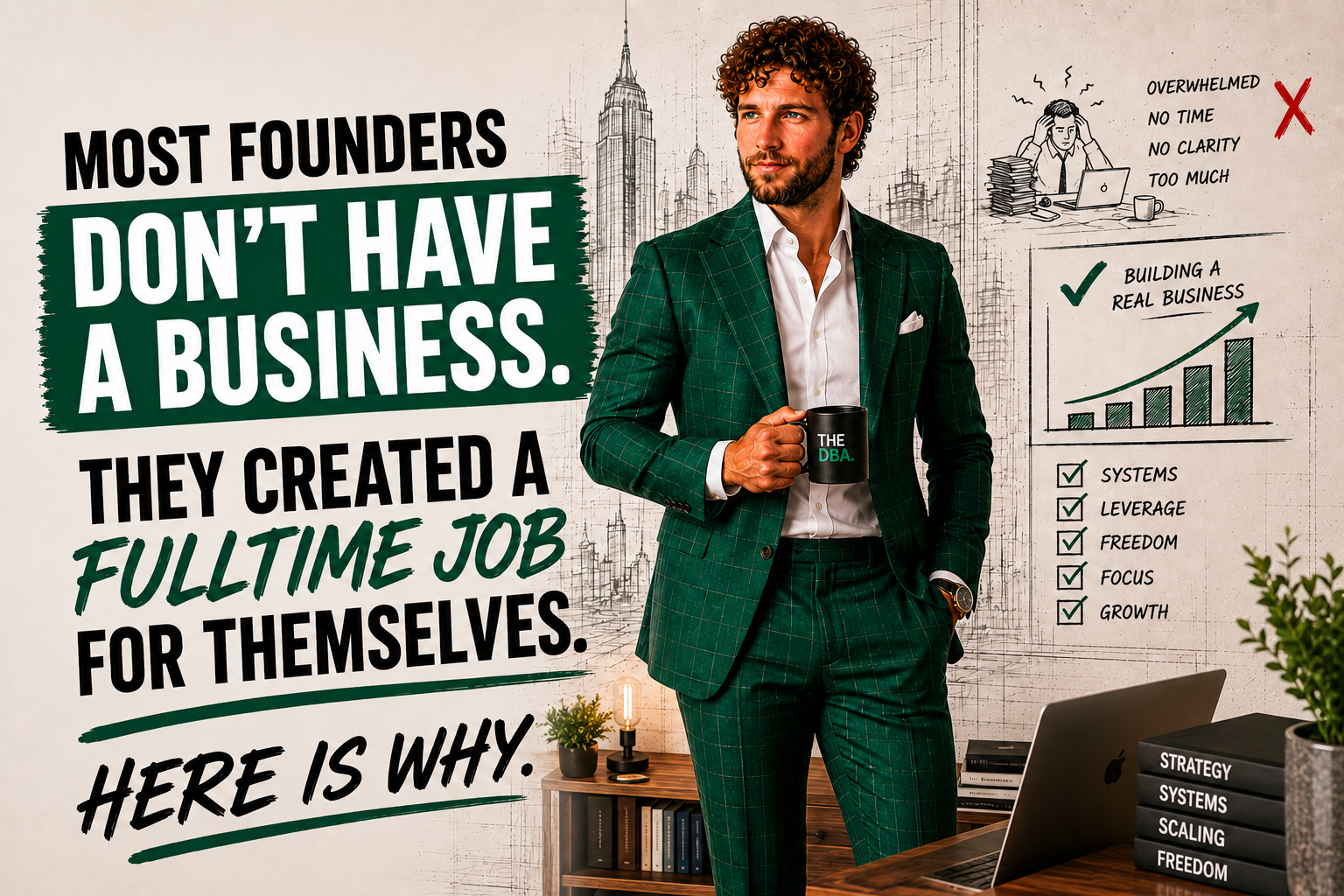
That’s what this blog is about. The difference between a job and a business. And why most founders never figure it out.
The Job: You Work for Your Business
Let me describe a job. You wake up. You answer emails. You solve problems. You put out fires. You go to meetings. You make decisions. You go to bed. Repeat.
The business needs you. Every day. Every decision. Every problem. You are the engine. Without you, nothing moves. Your team waits for your approval. Customers wait for your response. Problems wait for your solution.
This feels like ownership. It feels like responsibility. It feels like being a founder. But it’s not. It’s employment. You’ve just hired yourself. And you’re the worst boss you’ve ever had.
I had a client like this. Marketing agency. $800k revenue. He was in every sales call. Every creative review. Every client meeting. He worked 70 hours. His team worked 30. They waited for him. He was the bottleneck. He thought he was being a leader. He was being a blocker.
The sign you have a job: If you stop working, everything stops. The business doesn’t run without you. You’re not the owner. You’re the hostage.
The Business: Your Business Works for You
Now let me describe a business. You wake up. You check your dashboard. Numbers are good. Revenue came in while you slept. Customers got served. Problems got solved. By systems. By people. Not by you.
You work on strategy. On growth. On new opportunities. Not on fires. Not on decisions your team could make. You take vacation. Real vacation. No email. No calls. The business doesn’t know you’re gone.
I have a client like this. E-commerce. $7M revenue. He works 15 hours per week. He took 6 weeks off last year. His business grew 40% while he was gone. Because he built systems. Not dependencies.
He said: “The hardest part was letting go. Trusting that my team could do it without me. They could. They just needed me to get out of the way.”
The sign you have a business: If you stop working, everything keeps running. You’re not the engine. You’re the architect.
The 7-Figure Trap: Why More Revenue Doesn’t Mean More Freedom
Most founders think $1M is the magic number. Hit $1M and everything gets easier. Wrong. Hit $1M and everything gets harder. If you haven’t built systems, $1M is just more chaos. More customers. More problems. More stress.
I’ve seen founders at $500k who were happy. I’ve seen founders at $3M who were miserable. Revenue doesn’t create freedom. Systems create freedom. A $500k business with systems is better than a $2M business without them.
A client hit $1.8M. She was miserable. Working 80 hours. Hating her life. She said: “I thought money would fix everything. It fixed nothing. I just have more expensive problems now.”
We stopped chasing revenue. We started building systems. Within 6 months, her revenue was $2.2M. Her hours dropped to 30. She took her first vacation in 4 years. Same revenue. Different systems. Different life.
Revenue without systems is just expensive chaos. More money won’t fix a broken foundation. It will break it faster.
The 3 Questions That Separate Jobs from Businesses
Question 1: Can you take 2 weeks off without checking email? If no, you have a job. Your business needs you too much. That’s not ownership. That’s a leash.
Question 2: Does your team make decisions without asking you? If no, you have a job. You’re the bottleneck. Your team is waiting for permission. That’s not leadership. That’s a traffic jam.
Question 3: If you disappeared for a month, would revenue drop by more than 20%? If yes, you have a job. Your business is not an asset. It’s a dependency. On you.
Answer these honestly. Most founders answer “no” to all three. They have jobs. Not businesses. And they don’t even know it.
Why Founders Get Stuck in the Job Trap
It’s not laziness. It’s not stupidity. It’s fear. Fear of letting go. Fear that things won’t be done right. Fear that the business will fall apart. Fear that you’re not actually needed.
So you hold on tighter. You check more things. You approve more decisions. You answer more questions. You become more important. And more trapped.
I had a client like this. Consulting business. $1.4M revenue. He reviewed every deliverable. Every proposal. Every invoice. His team was talented. He didn’t trust them. He said: “What if they make mistakes?” I said: “They will. That’s how they learn. You made mistakes too. Remember?”
He started letting go. Small things first. Then bigger things. Within 3 months, his team was handling everything. He went from 60 hours to 25. His business grew. Because he finally got out of the way.
The trap is fear. The escape is trust. Trust your team. Trust your systems. Trust that the world won’t end if you’re not in control.
The Shift: From Worker to Architect
The founders who escape the job trap make a fundamental shift. They stop working in their business. They start working on it.
Working in the business is doing. Answering emails. Solving problems. Making sales. Fixing things. Working on the business is building. Systems. Processes. Teams. Culture. Leverage.
The first makes you busy. The second makes you free. The first feels productive. The second actually is productive. The first keeps you stuck. The second helps you scale.
Every hour you spend working in your business is an hour you’re not spending working on it. And every hour you spend working on it multiplies your impact. That’s leverage. That’s how you build a real business.
Real Story: From 80 Hours to 25 Hours (and Double the Revenue)
Client, software agency. $900k revenue. Founder worked 80 hours. Exhausted. Depressed. His wife was considering leaving. His kids didn’t know him. He was successful by revenue. Broke by every other measure.
We audited his business. He was involved in everything. Sales. Delivery. Support. Hiring. Finance. He was the CEO, the salesperson, the project manager, and the janitor.
We built systems. A sales process he didn’t need to be in. A delivery system his team could run. A support system that worked without him. A hiring process that found better people faster.
Within 6 months, his hours dropped to 25. Revenue hit $1.8M. His team was happier. His wife stayed. His kids got their dad back.
He said: “I thought being a founder meant being in control. It doesn’t. It means building systems that don’t need you.”
That’s the difference between a job and a business. A job needs you. A business works without you.
The Hard Truth
Most founders will never figure this out. They’ll keep working 60 hours. Keep being the bottleneck. Keep telling themselves “next year will be different.” They’ll burn out. Sell for less than they’re worth. Or just close up shop and get a real job.
The ones who figure it out do one thing differently. They stop trying to be the hero. They start building systems. They let go of control. They trust their team. They work on their business, not in it.
You can keep being the hero. Or you can build a business that doesn’t need one. Choose. Then build.
Do you have a job or a business? Most founders don’t know. I can tell you in 20 minutes.
Book a free call. I’ll audit your business and show you exactly what’s keeping you stuck in the job trap.
Book a free call →No pressure. Just an honest conversation about your business.
Matteo
The Digital Business Architect
I build systems. You build freedom.
No system? No business. Stop working IN your business. Start working ON it.